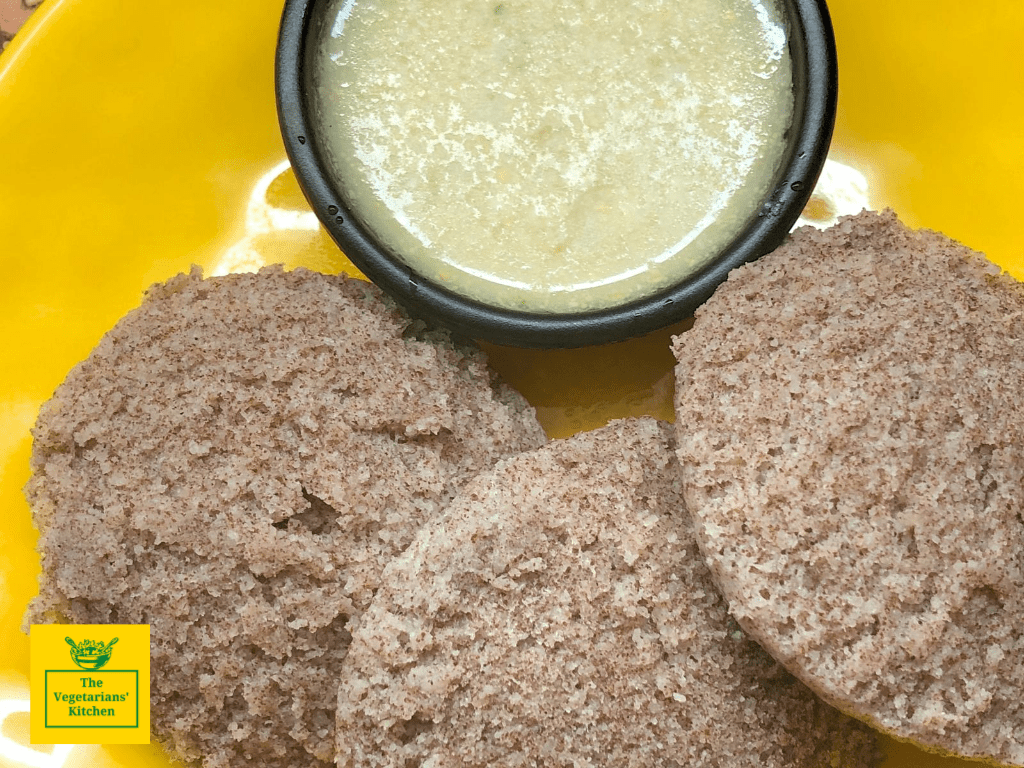
Bored of the regular idli? Try this alternative that is equally healthy and tasty!
I admit, I have never really eaten ragi idli in my life. Before I tried making one for the website, that is. I am not much of a fan of the regular idli so I didn’t think that ragi idli would be any better. But recently, I have become more interested in grains other than rice and wheat, and since everyone keeps telling me ragi (aka finger millet) is very healthy (am sure you have heard that too), I decided to explore how to make ragi idli.
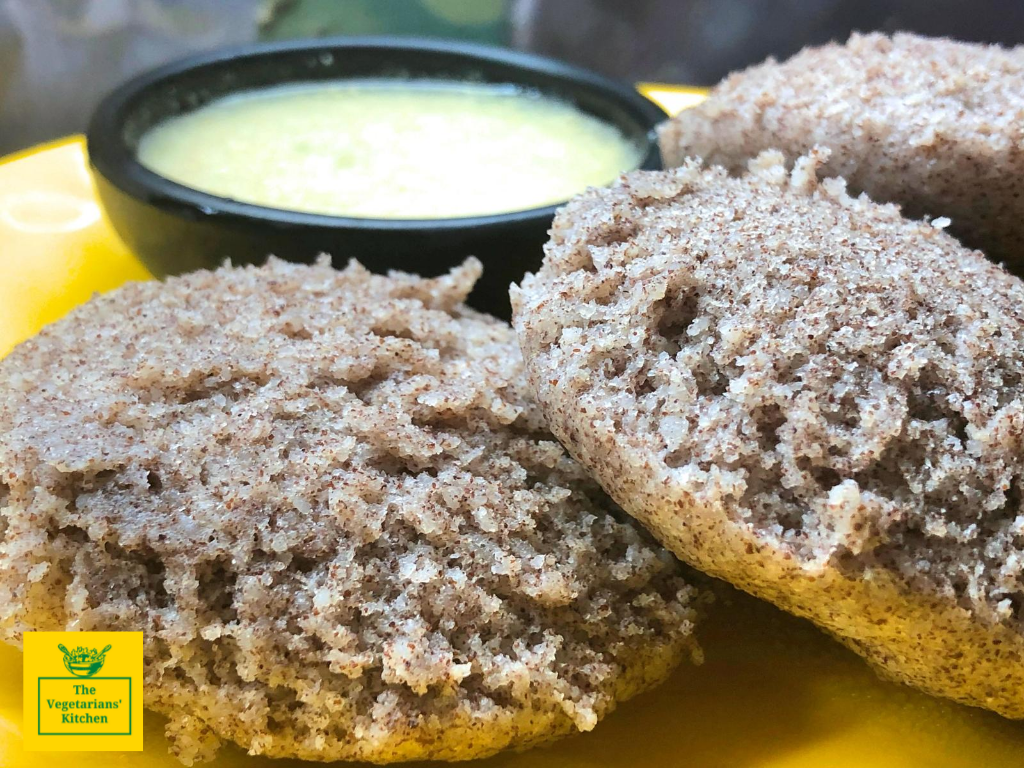
I’ll admit, I quite liked the end result. I find it to be tastier than the regular idli and it doesn’t really need a chutney or a sambar to go with it; it can stand proudly on its own too.
Ragi Idli recipe
This recipe makes 22 regular-size idlis
Ingredients:
225 grams (1 cup) idli rice
175 grams (heaped 1 cup) ragi (finger millet) flour
150 grams whole urad white / 175 grams split urad dal
Salt to taste
Method:
Rinse rice minimum two times to remove dirt. Once it is clean, soak rice for eight hours in room temperature (25 degrees C to 35 degrees C) water. Let the water level be about an inch above the rice in the vessel. At the end of eight hours, you’ll see that the rice has absorbed all the water.
Soak urad for two hours and then grind it into a very smooth paste, by adding a little water at a time (as less water as possible).
Grind rice into a slightly rough paste by adding a little water at a time (again, as less water as possible).
Mix the urad, rice and ragi flour with salt and enough water to create a thick batter.
Let the batter ferment for six hours.
Once the batter has fermented, pour a ladle or so in each crevice of the idli plates. Place the plates in a cooker, close the lid (no weight/whistle) for 10 minutes or till they are done.
Once they are done, switch off the flame and wait for five minutes before opening the cooker.
Using a spoon, scoop out the idlis onto a plate.
Serve hot with chutney or sambar.
Pro tip:
If you feel your idlis may not slide out of the plates easily, you can grease the plates with oil before pouring the batter.
“One cannot think well, love well, sleep well, if one has not dined well.”
Virginia Woolf, A Room of One’s Own
 The Vegetarians' Kitchen