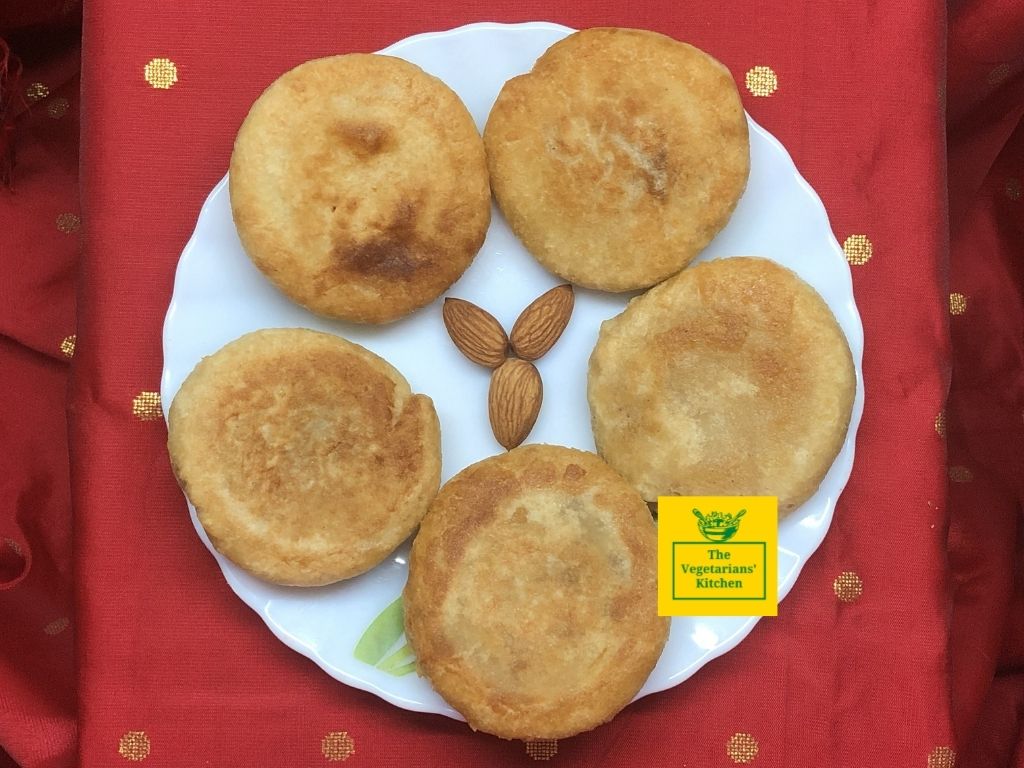
This Korean pancake is stuffed with a sweet filling that will simply melt in your mouth
When I visited Seoul, I didn’t realise that South Korea actually had dishes that were plant-based even according to the original recipe. Had I known that, I would have definitely sampled Hotteok in the local markets. I have now decided to make up for my lack of research by figuring out how to make it at home. It is a pretty easy recipe and I am sure you’d love it too.
I did think long and hard about whether I can classify Hotteok as being a plant-based dish since it uses yeast. I did a lot of research into this (I can learn from my mistakes, you know). I found that while there is a small community among vegans who believes that yeast is not vegan, the majority seems to accept it as vegan. I finally went with what People for the Ethical Treatment of Animals (PeTA) had to say about this as the organisation is usually very strict about what is vegan and what is not:
Is Yeast Vegan?
Yup! Yeast is everywhere—in your body and in the air, and it’s not derived from animals.
Once I had that issue resolved, I went ahead with a clear conscience and made Hotteok. One bite and I was transported to the glittering streets and bustling markets of Seoul.
Give it a go!
(This recipe is a part of a series about how the method of stuffing a piece of dough and flattening it out unites us across cultures. Check out the complete series here.)
Hotteok recipe
Ingredients:
300 grams all-purpose flour (maida) + flour for dusting
1 cup water
2 tsp active dry yeast
2 tsp granulated sugar
25 almonds, powdered
2 tbsp raw sugar
A pinch of cinnamon powder (optional)
Oil for frying
Method:
Heat the water to an optimum temperature (between 40 degrees Celsius and 45 degrees Celsius or 105 degrees Fahrenheit to 115 degrees Fahrenheit) and pour it into a huge bowl. Stir in the sugar first, then add the yeast. Wait for at least 15 minutes for the yeast to proof. You’ll know it has when you see the mixture turn foamy.
Once the yeast has proved, add the flour and salt. Knead it into a dough within the bowl.
Cover the bowl with a lid or clingfilm and set aside to let it rise. You’ll need to wait till the dough doubles in size. It may take anywhere from an hour or two depending on the temperature in your kitchen.
While the dough rises, prepare the filling.
Mix the almond powder, the raw sugar and the cinnamon powder in a small bowl and set aside.
Once the dough has risen, punch it to let the air out and then let it sit covered for another half an hour or so.
Dust a flat surface with flour. Take the dough out of the bowl and knead it on the flat surface. If the dough is too sticky, use some more flour to help you knead the dough into a proper ball. Even if the dough is too sticky, do not mix extra flour directly in the dough; instead dust the surface with flour and roll the dough in it while you knead it. If you are still having trouble working the dough, clean your hands off the sticky dough, oil your palms, and then knead the dough again. It will help but remember to choose the same type of oil that you will later use for frying the Hotteok.
Divide the dough into small balls. Flatten them into circles either with your fingers or with a rolling pin. (If you are using a rolling pin, you may want to use parchment paper as the base for your ball of dough so it will be easier to pick up.)
Spoon a bit of your prepared filling into the centre of the circle of dough and wrap the edges around it. Ensure that the filling is completely covered by the dough and there are no gaps or tears.
Heat oil in a shallow pan such that it covers the pan’s base. Place your stuffed dough ball in the pan, with the smooth side on top. After a few seconds, when it seems like the dough has slightly stiffened, flip the ball.
Use a Hotteok stick or a pav bhaji masher to press the dough in the pan into a thick circle carefully.
After a few seconds, flip the flattened dough. Flip as needed to ensure both sides are done. Once both sides are a nice golden brown, you can transfer the Hotteok from the pan onto a plate.
Serve warm.
 The Vegetarians' Kitchen