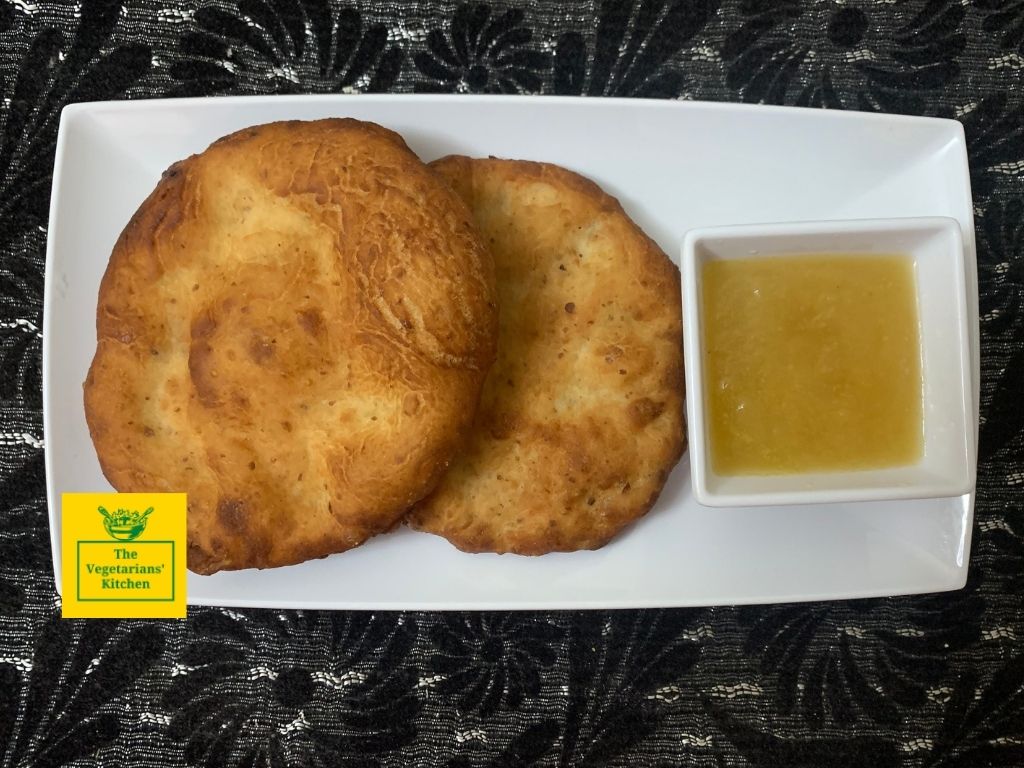
This sweet fried dough from the Balkans is a decadent indulgence you will simply love — and it is vegan!
This sweet fried dough from the Balkans reminds me of James Bond — it goes by multiple names, has two faces and is so sexily sinful that it is impossible to resist.
Meet mekici aka mekitsi aka mekitsa, a delectable fried bread that can either be sweet or savoury, but is so delicious in either form that you will willingly gobble it up.
In this recipe, we are focusing on the sweet version because we at TVK love our sweets! But if your taste leans towards the savoury side, simply cut the sugar down to 1/2 or 1 teaspoon per cup of flour. You can then eat it with any accompaniment such as hummus or cheese.
But if you, like us, love to pamper your sweet tooth, then this recipe is perfect for you.
When I first started researching mekici aka mekitsi aka mekitsa, I was a bit disappointed as I learnt that the dish contains both dairy and egg. I was determined to make a vegan version of it which I and other lovers of plant-based food can enjoy.
I reached out to Maggie, a friend of mine from Macedonia, and as we discussed the dish, I noticed that she referred to it as mekici. I based this vegan version of mekici aka mekitsi aka mekitsa on her inputs and hence, I decided to stick to calling it mekici.
According to Maggie, the egg in the dish is not a defining ingredient – as it is in, say, a brioche bun. Replacing it with a substitute will not take away from the essence of the dish. What is important is the yeast, and the fluffiness and softness it gives to the dough. The end result, she explained, will be like fried naan, but softer and slightly sweeter.
Armed with this information, I set out to veganise mekici. I am happy to report that it turned out exactly like she described it. Did it work for you as well? Let us know in the comments!
(This vegan mekici recipe is part of the Delicious Fried Bread series, that includes a recipe for the Indian bread luchi, and a recipe for the Panamanian bread hojaldres.)
Vegan Mekici recipe
Ingredients:
300 g all-purpose flour
100 g Almond milk
100 ml warm water
10 g active dry yeast
1 tsp baking soda
1 flax egg (1 tbsp flax seed powder in 3 tbsp water)
2 tsp + 40 gms sugar
2 tbsp oil (neutral flavour/smell)
1/2 tsp salt
Oil for deep frying
Method:
In a bowl, mix 2 teaspoon of sugar and warm water. Add in the yeast and set aside for 15 minutes. At the end of that time, the yeast should have turned the water foamy. If it hasn’t turned foamy, you may want to redo the step.
In a small bowl, make the flax egg by mixing the flax seed powder in 3 tbsp water. Set aside for it to become gelatinous.
In another bowl, sift the flour, salt and baking soda. Add the almond milk, the flax egg, sugar, and the yeast mixture to the flour mixture. Combine everything to form a sticky dough.
Take a large bowl that has enough space for your dough to rise. Grease it with oil. Transfer the sticky dough into the bowl. Cover the bowl with cling wrap or with a plate and set aside for the dough to rise double its size. Depending on the weather conditions in your kitchen, this can take 2 hours or even longer.
Once it has risen, it is time to make the mekici.
Heat oil in a pan on a stove in medium flame. Ensure the oil is atleast half the depth of the pan.
Grease your palms and begin to divide the dough into small balls. Stretch each ball with your fingers to create a thin, round, flat piece of dough. (I used a rolling pin instead but this is the traditional method.)
Once the oil has heated up, slide in the flat piece of dough. When one side turns slightly brown, flip it with a spatula. Do this for 3-5 minutes till both sides are golden brown.
Remove the mekici from the oil and drain on tissue/ paper towel.
Serve with jam or sprinkle powdered sugar. Enjoy!
Pro tip
The temperature of the oil is very important when you are deep frying. Since different oils have different smoking points, it is very difficult to say that your hot is oil enough for deep frying just because it has reached N degrees Celsius. So how do you know if your oil is hot enough to start frying? Take a really really small bit of the dough and drop it into the oil. If it starts sputtering, then you know your oil is ready for frying.

 The Vegetarians' Kitchen